A lipid panel is a picture, not a verdict
These essays are for information only. They are not medical advice, diagnosis, or treatment. Read the full disclaimer.
BEFORE YOU READ
Medical Disclaimer. This information is for educational purposes only and is not medical advice, diagnosis, or treatment. Always consult a qualified healthcare professional before making changes to your diet, lifestyle, fasting practices, or medications. Do not stop or change any prescribed treatment without your doctor's guidance. Individual responses vary, and what works for one person may not be safe or effective for another.
BOTTOM LINE FIRST
LDL is a cargo number. Calling it "the bad cholesterol" is a poor definition. Native LDL delivers cholesterol the body uses. Damaged LDL is the form the plaque research points to. A lipid panel is a picture. LDL alone is not a standalone marker of poor heart health. Triglycerides, HDL, blood pressure, insulin resistance, CRP, and a coronary calcium score answer different questions. Dyslipidemia, a broken pattern, is not the same thing as a high cholesterol number.
WHAT THE PANEL ACTUALLY IS
A standard lipid panel reports cholesterol and triglycerides in the blood. Cholesterol does not float free. It rides in lipoprotein particles. The usual report gives you:
- LDL. Low-density lipoprotein. The lab often calculates this. It is the cholesterol cargo in LDL particles, not a count of the particles, and not a scan of your arteries.
- HDL. High-density lipoprotein. Cholesterol moving back toward the liver. A higher number is generally the friendlier pattern. It is still not a free pass.
- Triglycerides. Fat in the blood. They rise when the body is storing excess energy, especially when insulin is high.
- Total cholesterol. A sum. It is a weak place to start or stop. One combined number, without the rest of the panel, is thin context for a lab report. A clinician reading that page should already be looking past it.
Read them together. The same LDL with low triglycerides, solid HDL, normal blood pressure, and no insulin resistance is a different picture from that LDL with high triglycerides, low HDL, high blood pressure, and a rising waist.
The cholesterol essay is here: The Truth About Cholesterol on a High-Fat Animal-Based Diet (/articles/truth-about-cholesterol).
"BAD CHOLESTEROL" IS A SLOGAN
LDL particles carry cholesterol to cells. Cells use that cholesterol in membranes. The body also builds steroid hormones from cholesterol. The first step is cholesterol to pregnenolone, then the path splits toward cortisol, aldosterone, androgens (/glossary#androgens), and estrogens (/glossary#estrogens). Testosterone is one androgen. Estradiol is one estrogen. That is textbook steroid synthesis, not a theory.
So a native LDL particle is a delivery truck. The truck is not the injury. What the plaque research points to is LDL that has been altered, usually by oxidation. Oxidized LDL is a poorer fit for the liver's normal LDL receptor. Immune cells take it up through scavenger receptors that do not switch off the same way. That is a working description of damaged LDL, not a second name for every LDL number on a lab sheet.
Paul Mason (https://www.youtube.com/watch?v=rdgS3PuSuyg) makes this distinction in a Low Carb Down Under (https://www.lowcarbdownunder.com.au/) lecture, "The truth about high cholesterol," from the 2022 Gold Coast meeting: LDL doing its job is not the same thing as LDL that has been damaged. Philip Ovadia (https://ovadiahearthealth.com/), a heart surgeon, makes the related clinical point in talks and in Stay Off My Operating Table: metabolic health and artery disease are the question, not an LDL target in isolation. Ben Bikman (https://www.benbikman.com/) and Jason Fung (https://www.doctorjasonfung.com/) argue from the insulin side. A high-insulin state changes how fat is stored and how the lipid pattern looks. None of these lectures is a trial. They are the plain-language case that a cholesterol number and a dyslipidemic pattern are different items. Low Carb USA (https://www.lowcarbusa.org/) and Low Carb Down Under (https://www.lowcarbdownunder.com.au/) are where most of those talks live.
WHY THE RATIOS MATTER
The triglyceride-to-HDL ratio splits two numbers already on the page. In milligrams per deciliter, divide triglycerides by HDL.
There is no official cutoff. In research, a ratio under 2 is often read as the easier pattern. A ratio over about 3 to 3.5 is often read as the harder one. Those bands are not a diagnosis. They do not transfer if the lab uses mmol/L.
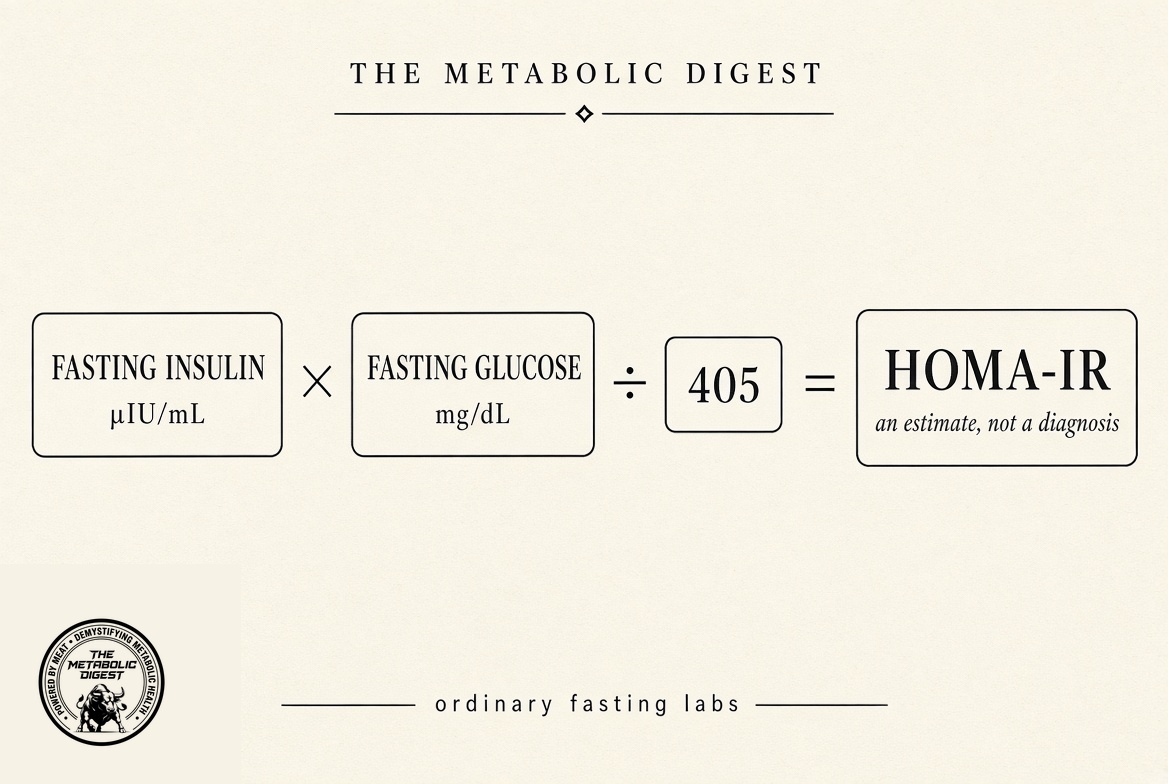
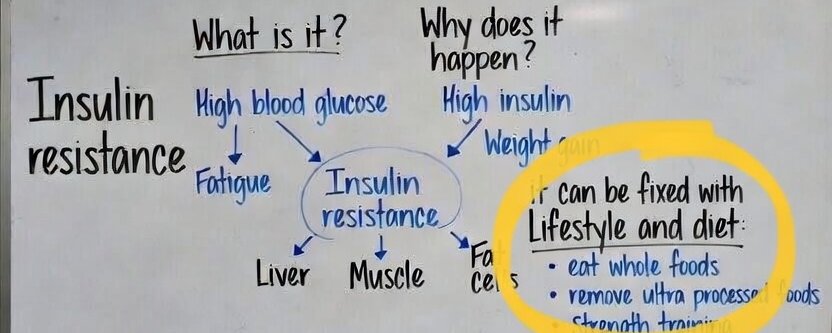
A high triglyceride-to-HDL ratio tracks with insulin resistance and with smaller, denser LDL. It does not prove either one. Insulin resistance is the deeper question: What is Insulin Resistance (/articles/what-is-insulin-resistance). HOMA-IR is the lab version: HOMA-IR (/articles/homa-ir-behind-normal-glucose). That high-triglyceride, low-HDL pattern is what these essays mean by a dyslipidemia that matters. A lone high LDL, with triglycerides on the floor, is not the same pattern.
LDL IS CONTEXT, NOT A VERDICT
Guidelines treat LDL as a treatment target. That is a policy choice. It is not the same as saying an LDL number, alone, shows diseased arteries.
People with the same LDL do not share the same risk. Blood pressure, insulin, triglycerides, HDL, smoking, age, and a scan of the arteries change the reading. Particle number can also disagree with calculated LDL. The panel's LDL line does not show that disagreement.
OTHER MARKERS THAT BELONG IN THE SAME CONVERSATION
None of these is a verdict either.
- Blood pressure. High pressure damages artery walls. It is measured directly.
- Insulin resistance. High insulin, a high triglyceride-to-HDL ratio, or a high HOMA-IR says the metabolic engine is pushing storage.
- C-reactive protein (CRP) (/glossary#crp). A protein the liver releases when inflammation is up. The high-sensitivity test is the one used in heart-risk talks. Infection, injury, and extra body fat can raise it. A high number is a reason to look, not a diagnosis.
- CAC score. A coronary artery calcium scan scores calcified plaque in the heart arteries. Zero is a strong favorable sign in the studies that use it. A rising score means calcified plaque is there. It looks at the disease instead of a blood proxy. It is still a baseline, not a complete map. Soft plaque may not be calcified yet. The scan uses radiation. It is not a casual annual test.
The lipid panel asks what is in the blood. The calcium score asks whether calcified plaque has already formed. For someone being told their heart risk is the LDL number, a baseline CAC is the more direct piece of evidence.
THE BODY MAKES MOST OF ITS CHOLESTEROL
Most cholesterol in circulation is made in the body, largely in the liver and intestine. A common estimate is about 80 percent endogenous. Diet is the smaller share. It is an estimate, not a meter reading. Eating more cholesterol also leads the liver to make less. That estimate is laid out in a 2026 review of where circulating cholesterol comes from (Roberts, Methodist DeBakey Cardiovascular Journal, 2026).
WHAT THE COHORT STUDIES ACTUALLY FOUND
A 2016 review of older adults (Ravnskov et al., BMJ Open) looked at LDL and death in people 60 and older. Across most of those cohorts, higher LDL was tied to lower all-cause mortality, or to no higher mortality. These are observations, not trials.
A 2025 study of Chinese and UK adults (Jiang et al., Engineering) followed the Dongfeng-Tongji and Kailuan cohorts and the UK Biobank. Higher total cholesterol, LDL, and non-HDL were associated with higher coronary death. Low cholesterol, and cholesterol that fell over about four years, was associated with higher all-cause death and higher cancer death. The authors treat low and falling cholesterol as a marker of premature death, not as proof that raising cholesterol prevents cancer.
Read both narrowly. They do not prove that high LDL extends life. They do not cancel risk in a younger adult with diabetes, smoking, and a high calcium score. They do undercut the idea that a higher cholesterol number is, by itself, a longevity sentence, and they do not support "lower is always safer."
WHAT TO DO WITH THIS INFORMATION?
Do not stop at total cholesterol or at LDL. Ask for the full panel. Divide triglycerides by HDL, in mg/dL. Put blood pressure beside those numbers. If fasting insulin was drawn, look at HOMA-IR. If the heart-disease case is "bad cholesterol" and nothing else, ask what else on the page is off, and whether a baseline coronary calcium score has been done.
A high cholesterol number is not dyslipidemia. Dyslipidemia is the broken pattern: high triglycerides, low HDL, insulin resistance, high blood pressure, inflammation, damaged LDL. Very few markers stand alone. LDL is not one of the good ones.
POSTSCRIPT
About 80 percent of circulating cholesterol is made in the body (Roberts, Methodist DeBakey Cardiovascular Journal, 2026). Steroid hormones are built from cholesterol through pregnenolone. Oxidized LDL, not native LDL, is the form taken up without the normal receptor brake. The triglyceride-to-HDL ratio is a research surrogate, not a guideline cutoff. Higher LDL was not tied to higher death in most cohorts over age 60 (Ravnskov et al., BMJ Open, 2016). Low and falling cholesterol tracked with higher cancer and all-cause death; higher cholesterol tracked with coronary death (Jiang et al., Engineering, 2025). Lectures and clinics: Paul Mason, Low Carb Down Under, 2022 (https://www.youtube.com/watch?v=rdgS3PuSuyg); Philip Ovadia (https://ovadiahearthealth.com/); Ben Bikman (https://www.benbikman.com/); Jason Fung (https://www.doctorjasonfung.com/). Also discussed on X: @metabolicdigest (https://x.com/metabolicdigest).
Medical Disclaimer. This information is for educational purposes only and is not medical advice, diagnosis, or treatment. Always consult a qualified healthcare professional before making changes to your diet, lifestyle, fasting practices, or medications. Do not stop or change any prescribed treatment without your doctor's guidance. Individual responses vary, and what works for one person may not be safe or effective for another.
This article is for informational purposes only. Full disclaimer: /disclaimer
Your health, your responsibility.
Continue exploring
Related reading.
Labs & Language
The Truth About Cholesterol on a High-Fat Animal-Based Diet
Insulin & Hormones
What is Insulin Resistance… and why should you care?