
The Truth About Cholesterol on a High-Fat Animal-Based Diet
These essays are for information only. They are not medical advice, diagnosis, or treatment. Read the full disclaimer.
Medical Disclaimer. This information is for educational purposes only and is not medical advice, diagnosis, or treatment. Always consult a qualified healthcare professional before making changes to your diet, lifestyle, fasting practices, or medications. Do not stop or change any prescribed treatment without your doctor's guidance. Individual responses vary, and what works for one person may not be safe or effective for another.
Bottom Line First:
Eating more animal fat and protein can raise your total cholesterol or LDL number, but that doesn’t automatically mean higher heart disease risk. For many people on well-formulated low-carb or animal-based diets, the cholesterol pattern often improves in ways that matter more for metabolic health — especially when triglycerides drop and HDL rises.
Cholesterol is one of the most important molecules in your body. It is a key building block of every cell membrane, helping keep cells strong yet flexible. It serves as the raw material (precursor) for all steroid hormones, including testosterone, estrogen, cortisol, and vitamin D. It plays vital roles in brain health, immune function, and repairing damaged tissue. Without adequate cholesterol, humans could not survive.
Importantly, the body (specifically the liver and other tissues) produces most of its own cholesterol every day because it is that essential. Dietary cholesterol from food has only a modest impact for most people.
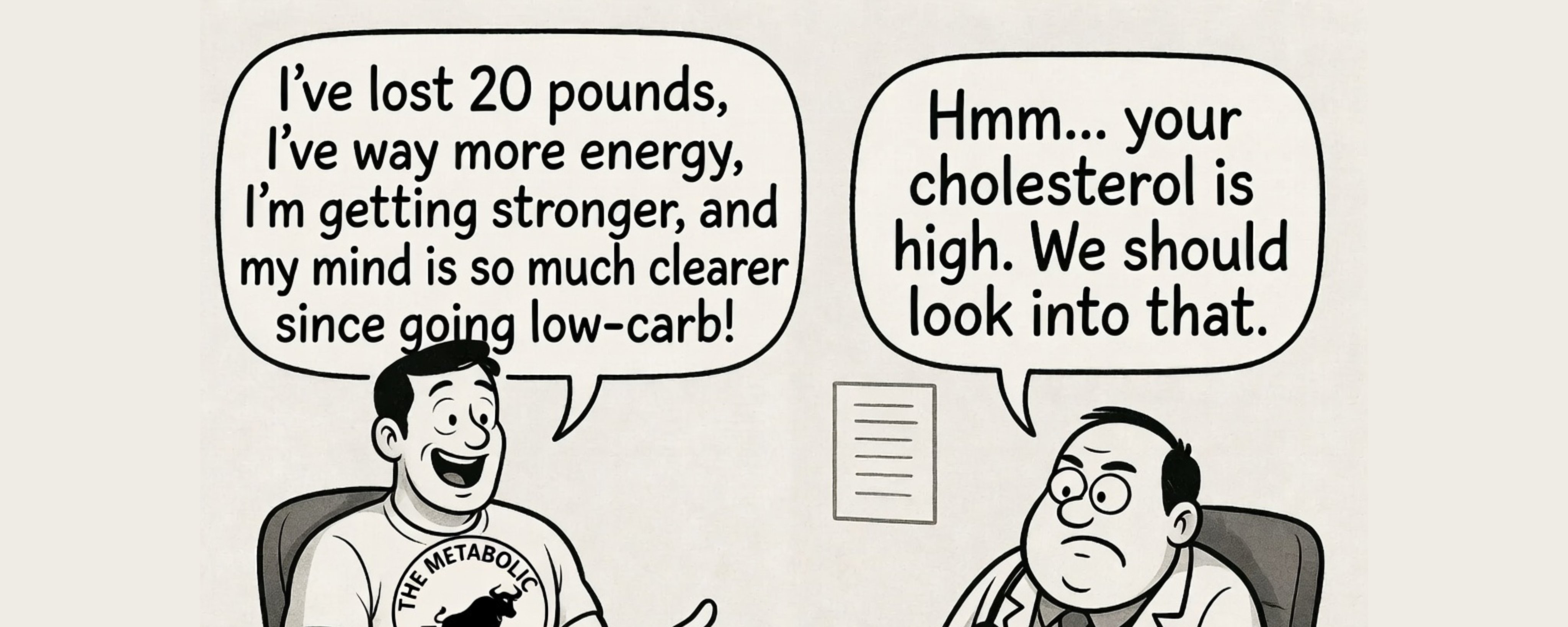
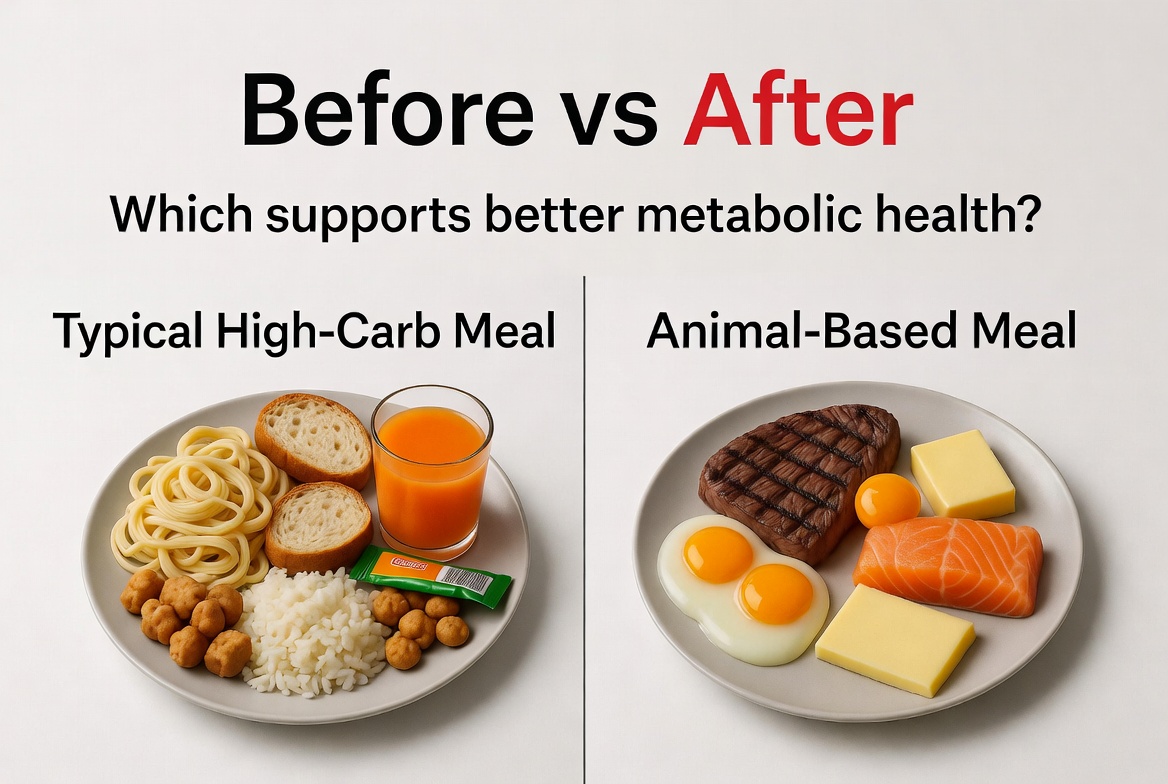
You switch to steak, eggs, butter, and salmon to feel better, lose fat, and stabilize energy. Then your doctor says your cholesterol went up and you start to worry. This is incredibly common — and usually misunderstood.
LDL and HDL Are Not Cholesterol (They Carry It)
Cholesterol is just one molecule. There is no “good” or “bad” cholesterol in the human body. LDL and HDL are lipoprotein carriers — packages made of proteins and fats that transport cholesterol and other lipids through the bloodstream. A standard blood test reports the cholesterol carried inside them (LDL-C and HDL-C), not the carriers themselves. LDL carries cholesterol from the liver to tissues that need it. HDL carries excess cholesterol back to the liver for recycling or disposal. The real story is not how much cholesterol is present, but how well your body is handling fat and energy overall.
Why Cholesterol Numbers Can Rise on Animal-Based Diets
When you eat fewer carbohydrates, your body shifts from burning sugar to burning fat for fuel. One leading explanation, the Lipid Energy Model from Nick Norwitz, Dave Feldman, and colleagues (Metabolites, 2022), is that the liver sends out more fat-carrying VLDL particles, which become LDL once they unload their fat. The model is still being tested. One caution if you follow this research: the best-known imaging study of people with this pattern, the one-year KETO-CTA follow-up (JACC: Advances, 2025), was retracted in 2026 at the request of its authors and the journal's editors. Whether a diet-driven LDL rise in a lean, metabolically healthy person carries plaque risk remains an open question, so pair the blood panel with a CAC scan and a clinician who reads the whole picture. At the same time, your triglycerides usually drop sharply and your HDL often goes up.
Source: Retraction notice, JACC Adv 2026;5(5):102824. doi:10.1016/j.jacadv.2026.102824, retracting Soto-Mota A et al. JACC Adv 2025;4(7):101686. doi:10.1016/j.jacadv.2025.101686.
This pattern — higher LDL but much better triglycerides and HDL — is very different from the dangerous pattern seen in people eating high-carb, high-sugar diets.
Key point: Total cholesterol or LDL alone doesn’t tell the full story. The context of your whole metabolic health (especially insulin levels, triglycerides, and particle size) matters far more.
What Actually Causes Plaque Buildup in Arteries
Plaque formation usually begins with damage to the inner lining of the arteries. Common drivers of that damage include chronically elevated blood glucose (which creates inflammation and oxidative stress), industrial seed oils (which are prone to oxidation and can promote inflammation), and other toxins or stressors. These factors injure the arterial wall, leading the body to patch the damage with cholesterol and other substances, eventually forming plaque.
Most people with plaque buildup have these metabolic or lifestyle-related drivers rather than rare genetic conditions. However, some individuals have genetic conditions that change the picture. The most common is familial hypercholesterolemia (FH), which affects about 1 in 250 people and causes very high LDL from birth and earlier heart disease. Others, such as hereditary thrombophilias, raise the tendency for excessive blood clotting. These are separate from typical metabolic causes and require different medical management.
For Those Concerned About Heart Disease or Atherosclerosis
If you or your doctor are worried about cardiovascular disease (CVD), look beyond standard cholesterol numbers. A Coronary Artery Calcium (CAC) scan measures calcified (hard) plaque buildup and serves as a useful baseline or reference marker. It is fairly easy to get — simple, quick, inexpensive, and non-invasive. It does not detect soft (non-calcified) plaque, so additional testing may be needed in some cases. Always review your CAC score with a doctor knowledgeable in metabolic health who can interpret it in the context of your full metabolic profile (including HOMA-IR for insulin resistance and the triglyceride-to-HDL ratio).
Cardiothoracic surgeon Dr. Phil Ovadia (@iFixHearts) frequently explains that many people on low-carb or animal-based diets show improved metabolic health even when LDL rises, and he emphasizes treating the patient’s full metabolic profile rather than chasing a single number.
Resources for Further Research
Retraction notice, JACC Adv 2026;5(5):102824. doi:10.1016/j.jacadv.2026.102824, retracting Soto-Mota A et al. JACC Adv 2025;4(7):101686. doi:10.1016/j.jacadv.2025.101686.
Dr. Phil Ovadia (@iFixHearts) – lectures and writings on cholesterol, heart disease, and metabolic health
Dave Feldman (@DaveKeto) – pioneering work on lean mass hyper-responders and detailed lipid research on low-carb diets
Nick Norwitz (@nicknorwitz) – research on cholesterol metabolism, especially in the context of ketogenic and animal-based eating
Dr. Ben Bikman (@BenBikmanPhD) – Metabolic Classroom series explaining insulin’s role in lipid metabolism
Dr. Paul Mason (@DrPaulMason) – excellent talks on why LDL can rise on low-carb diets without increased risk
Dr. Peter Ballerstedt (@GrassBased) – discussions on ruminant animal foods and overall metabolic health
Book: “The Great Cholesterol Myth” by Jonny Bowden and Stephen Sinatra (for a broader historical perspective)
Easy Actionable Steps You Can Start Today
Read the whole panel, not one number — Ask for fasting triglycerides, HDL, fasting insulin or HOMA-IR, and glucose alongside LDL or total cholesterol. Context is the point.
Favor the pattern that usually improves on a well-formulated animal-based low-carb diet — lower triglycerides, higher HDL, lower insulin demand. That pattern matters more than an isolated LDL rise.
Keep industrial seed oils out of the kitchen — Use tallow, butter, ghee, or the fat that comes with the animal. Oxidized seed oils are a more plausible driver of arterial injury than steak fat.
If cardiovascular risk is the worry, add a baseline that is not a single blood number — Discuss a Coronary Artery Calcium (CAC) scan with a clinician who understands metabolic health. It is a marker of calcified plaque, not a complete picture.
Do not start, stop, or change a lipid drug from an article — Work with a professional who will interpret LDL in the setting of insulin, triglycerides, and the rest of your health.
Keep carbs low enough that you are burning fat for fuel — That is the setting in which higher LDL often appears as an adaptation, not as a verdict.
More resources to explore:
Follow @metabolicdigest on X for more on insulin, cholesterol context, and real-food nutrition. Full site disclaimer: /disclaimer
Final Thought
A higher cholesterol number on a high-fat animal-based diet is often a sign your body is adapting well to using fat for fuel — especially when triglycerides drop and HDL rises. Stay inquisitive, do your own research, and be skeptical of guidelines that focus on single numbers instead of the full metabolic picture. Work with a knowledgeable healthcare professional who understands metabolic health to interpret your results in context.
This is part of The Metabolic Digest series — clear, practical explanations to help you understand and improve your metabolic health through ketogenic and animal-based whole foods.
This article is for informational purposes only. Full disclaimer: /disclaimer
Your health, your responsibility.
Continue exploring
Related reading.
Food Quality
Why Animal Fat Is Not the Enemy
Insulin & Hormones