
HOMA-IR is the metabolic number hiding behind a “normal” glucose
These essays are for information only. They are not medical advice, diagnosis, or treatment. Read the full disclaimer.
Bottom Line First
A “normal” fasting glucose does not prove your insulin is normal. HOMA-IR is a simple score made from two ordinary fasting lab tests: glucose and insulin. It is a tool for reading insulin resistance, not a special machine. It estimates how hard insulin is working while you are at rest. It is not a diagnosis. It is not as precise as research clamp tests. Insulin assays also differ from lab to lab. Still, the score can show a pattern many standard panels miss: glucose looking fine while insulin is already high.
Medical Disclaimer. This information is for educational purposes only and is not medical advice, diagnosis, or treatment. HOMA-IR is not an official diagnostic test for diabetes. Always consult a qualified healthcare professional before making changes to your diet, lifestyle, fasting practices, or medications. Do not stop or change any prescribed treatment without your doctor's guidance. Individual responses vary, and what works for one person may not be safe or effective for another.
What the letters mean
HOMA-IR stands for Homeostatic Model Assessment of Insulin Resistance.
Homeostatic means the body trying to stay in balance.
Assessment means an estimate, not a photograph of every cell.
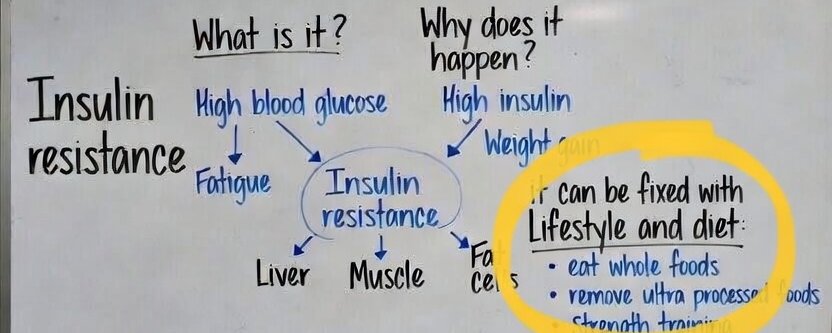
Insulin resistance means cells do not respond to insulin as well as they should, so the pancreas often makes more insulin to keep glucose in range.
In 1985, D. R. Matthews and colleagues at Oxford published this model in the journal Diabetologia. They compared fasting glucose and fasting insulin with more complex research tests. The estimate lined up reasonably well with those tests, but the original paper also reported a large spread in the numbers (about a 31% coefficient of variation for the insulin-resistance estimate). That limit still matters.
How this helps you understand insulin resistance
Insulin resistance is the name for cells that do not listen well to insulin. The longer story — what insulin is, the two-step problem, and why you should care — lives here: What is Insulin Resistance… and why should you care?. You do not have to read that page first. This page is the pocket tool.
HOMA-IR does not replace that explanation. It puts a number on one part of it: how much insulin is in the blood, next to how much glucose is in the blood, after a fast. If insulin is already high while glucose still looks ordinary, that is a clue that the pancreas may be compensating. That clue is why people bother with the score. It is a reading aid, not a verdict.
These are ordinary fasting labs, not a special machine
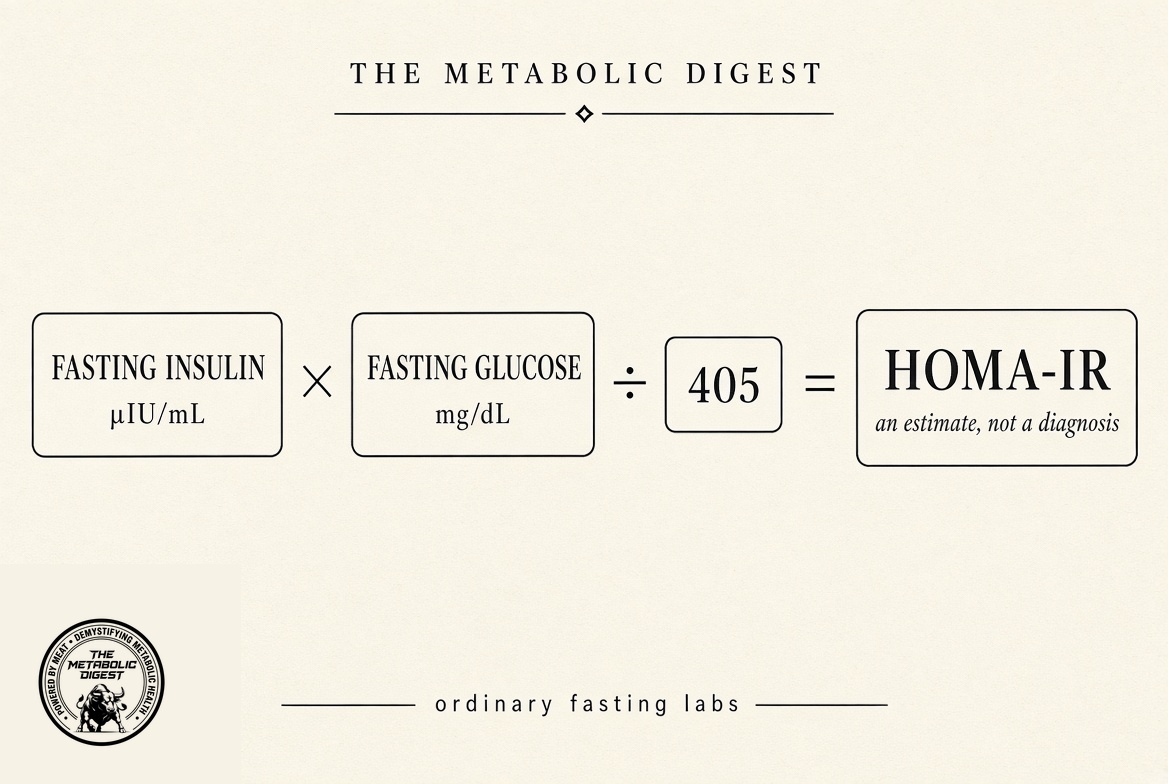
HOMA-IR is not a new machine and not a hospital-only procedure. It is two blood tests that already live in the normal lab catalog, multiplied and divided.
- Fasting glucose is on almost every standard metabolic panel.
- Fasting insulin is a common add-on order. Many clinics do not include it unless someone asks. The test itself is still a routine immunoassay, not a research clamp.
You do not need a university lab. You need a fasting draw and a lab that will run insulin. Some offices say no. That is a policy choice, not proof the test is exotic. If both numbers come back, anyone can run the arithmetic below — or the clinician can. The gold-standard clamp test is the exotic one. HOMA-IR exists so you are not stuck waiting for that.
The two numbers you need
Both must be fasting, taken the way your lab instructs (often 8 hours or more without food).
1. Fasting glucose — how much glucose is in your blood after the fast. This is the everyday “blood sugar” line. It measures glucose, not table sugar.
2. Fasting insulin — how much insulin is in your blood after the same fast.
Ask for them on the same morning. Same lab if you repeat later, so the insulin method is less of a moving target. Whether your clinic orders insulin is their call. The point is: these are standard tubes, not a secret panel.
The math (two versions of the same formula)
Labs in the United States usually report glucose in mg/dL. Many research papers use mmol/L.
If glucose is in mg/dL:
HOMA-IR = (fasting insulin × fasting glucose) ÷ 405
Insulin units here are µIU/mL (same number as mIU/L).
If glucose is in mmol/L:
HOMA-IR = (fasting insulin × fasting glucose) ÷ 22.5
Those two versions match because 22.5 × 18 is 405, and 18 is the usual factor used to convert mmol/L of glucose to mg/dL.
The 22.5 is not a magic medical constant. In the original model it is the product of an example “ideal” pair: insulin 5 µIU/mL and glucose 4.5 mmol/L. That pair scores 1.0 on the original scale.
Worked example (not a target)
Suppose fasting insulin is 12 µIU/mL and fasting glucose is 95 mg/dL.
12 × 95 = 1,140
1,140 ÷ 405 ≈ 2.8
That is only an example of the arithmetic. It is not a diagnosis.
Why glucose can look “fine” while the score is not
Insulin’s job includes moving glucose out of the blood and into cells. If cells ignore insulin, the pancreas can raise insulin to hold glucose down. For a while, the glucose number on the report still looks acceptable. That stretch is often called a compensated phase: extra insulin doing the work so the glucose line stays quiet.
A1c (average glucose over about three months) can also look calm in that stretch. A1c does not measure insulin.
What HOMA-IR can tell you
It is a fasting snapshot of the glucose–insulin pairing.
Used in many research studies as a stand-in when a clamp test is too heavy.
In some people it flags high insulin earlier than glucose or A1c alone.
What HOMA-IR cannot tell you
It is not a diagnosis of type 2 diabetes. Those diagnoses use other rules (fasting glucose, A1c, or an oral glucose tolerance test), set by clinical bodies — not by a HOMA-IR line.
It does not separate liver insulin resistance from muscle insulin resistance. As a fasting score, it leans toward the overnight, at-rest picture.
It is a poor tool when someone already takes insulin shots, because the formula assumes the insulin in the blood came from the person’s own pancreas.
It moves around. Insulin itself pulses. Illness, poor sleep, and not actually fasting change the inputs.
Different labs can print different insulin numbers from the same blood, because insulin tests are not fully standardized. The score moves with the test.
There is no single official “pass / fail” HOMA-IR number
This is a fact, not a hedge. Matthews and colleagues did not publish a clinical cutoff that every doctor must use. Later studies have suggested many different lines (examples in the literature cluster around values such as about 1.6, 1.8, 2.5, and others), depending on the people in the study and the insulin assay. No major diabetes organization treats HOMA-IR the way it treats fasting glucose cutoffs for diabetes.
So if a website prints a color chart with one magic number, treat that chart as that author’s choice, not as a law.
A gold-standard comparison (plain words)
The research gold standard for insulin sensitivity is a clamp test: insulin and glucose are dripped under tight control. It is accurate. It is also long, costly, and not a yearly physical. HOMA-IR exists because two fasting tubes are easier. Easier is not the same as exact.
How this sits with the rest of this library
If you want the hormone story first, read “What is Insulin Resistance… and why should you care?”
If you want why “eat less, move more” is incomplete, read “Why Counting Calories Doesn’t Work.”
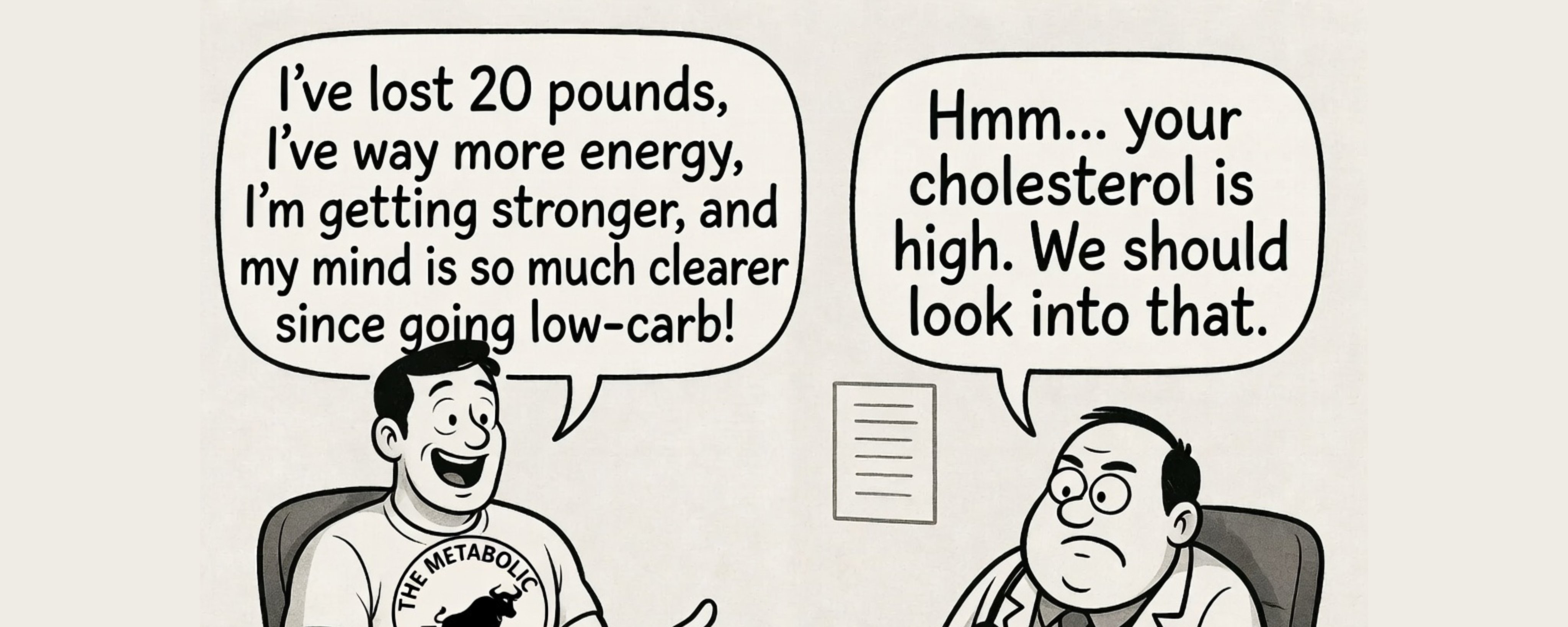
If a rising LDL number is the scare, read “The Truth About Cholesterol on a High-Fat Animal-Based Diet” and look at triglycerides, HDL, and insulin together — not one lipid line.
None of those pages is required to understand the formula above.
Practical, not a protocol
Ask whether your next fasting draw can include insulin next to glucose.
Use the same lab when you repeat the pair, so the insulin method is less of a moving target.
Read HOMA-IR with the rest of the picture you already have: how you feel after meals, waist trend, triglycerides, HDL, sleep, and medications.
Do not treat one score as a verdict.
Simple takeaway
HOMA-IR is two fasting labs turned into one estimate. It can show high insulin while glucose still looks ordinary. It cannot diagnose you. It cannot replace a clinician. It can start a better conversation than glucose alone.
Do some thoughtful research.
Your health, your responsibility.
Postscript: People and papers (not a treatment list)
Matthews D.R., Hosker J.P., Rudenski A.S., Naylor B.A., Treacher D.F., Turner R.C. “Homeostasis model assessment: insulin resistance and β-cell function from fasting plasma glucose and insulin concentrations in man.” Diabetologia 28 (1985): 412–419. Origin of HOMA. Also reported limited precision.
Wallace T.M., Levy J.C., Matthews D.R. “Use and abuse of HOMA modeling.” Diabetes Care 27 (2004): 1487–1495. How the simple formula relates to the fuller model, and why assay era matters.
Muniyappa R. and others, Endotext chapter “Assessing Insulin Sensitivity and Resistance in Humans” (updated review). Clamp vs surrogates; HOMA as a fasting estimate.
Benjamin Bikman, Ph.D. (cell biology and physiology, Brigham Young University; author of Why We Get Sick). In lectures and interviews he argues that fasting insulin is often the earliest common blood clue of trouble, that many U.S. lab “normal” insulin ranges run far higher than the values he considers a good sign, and that whole-body insulin resistance in humans comes with high insulin. Those are his stated views from public teaching (including Metabolic Classroom talks and a 2025 conversation with Levels). They are not HOMA cutoffs from the 1985 paper, and they are not this site’s medical orders.
Dr. Jason Fung has written for a general audience about high insulin years before glucose rises. Dr. Paul Mason has public talks on why fasting insulin belongs in the conversation. Read them as teachers. Cross-check with primary papers and with your own clinician.
This page is the source.
This article is for informational purposes only. Full disclaimer: /disclaimer
Your health, your responsibility.
Continue exploring
Related reading.
Insulin & Hormones
What is Insulin Resistance… and why should you care?

Insulin & Hormones
Why Counting Calories Doesn’t Work – And What Actually Does
Labs & Language