
Why Counting Calories Doesn’t Work – And What Actually Does

These essays are for information only. They are not medical advice, diagnosis, or treatment. Read the full disclaimer.
Bottom Line Up Front (BLUF)
Your body is not a simple calculator. The same number of calories from steak and eggs versus bread and soda will affect your weight, hunger, and energy in completely different ways — because hormones like insulin decide what gets burned for fuel and what gets stored as fat. Shifting to whole-food animal-based eating (high in protein and natural fats, very low in refined carbs) lets your body burn fat more easily without constant calorie math.
This paper explains why the old “calories in versus calories out” idea falls short and gives you a much better approach for real metabolic health.
Medical Disclaimer. This information is for educational purposes only and is not medical advice, diagnosis, or treatment. Always consult a qualified healthcare professional before making changes to your diet, lifestyle, fasting practices, or medications. Do not stop or change any prescribed treatment without your doctor's guidance. Individual responses vary, and what works for one person may not be safe or effective for another.
Why the Calorie Idea Started — And Why It’s Too Simple
In the late 1800s, scientist Wilbur Atwater measured how much heat different foods release when burned in a lab machine. He came up with rough numbers: about 4 calories per gram of carbohydrate or protein, and 9 per gram of fat. The simple advice became: eat fewer calories than you burn and you’ll lose weight.
That worked okay as a rough starting point, but your body is a living system — not a closed lab burner. It processes every food differently based on hormones, digestion costs, and what fuel it is told to use.
The Real Boss: Insulin (Your Body’s Fuel-Switching Hormone)
When you eat a meal high in carbohydrates (especially refined ones like bread, pasta, sugary drinks, or pastries), blood glucose rises quickly. Your pancreas releases insulin — the hormone that acts like a traffic cop.
Insulin’s main jobs include:
Letting glucose into cells to be used for immediate energy
Storing extra glucose as glycogen (quick fuel) or turning it into fat
Shutting down fat burning — it tells your fat cells to hold on to stored fat and stops your body from using dietary or body fat for fuel
This creates a problem with mixed meals: eating high carbohydrates together with high fat (think pizza, burgers with buns, donuts, or creamy pasta) gives your body two fuels at once. Insulin prioritizes the carbs, stores most of the fat, and you end up with less steady energy and often more hunger later.
Evidence note: Insulin's role in storing fat and switching off fat burning is well established in physiology research. Whether that adds up to extra fat loss at the same calorie intake (often called a "metabolic advantage") is still hotly debated. One well-run randomized trial found people burned about 200 more calories a day on a low-carb diet than on a high-carb diet while keeping their weight steady (Ebbeling et al., BMJ 2018). But a pooled analysis of 32 tightly controlled feeding studies with calories matched found no fat-loss edge for low-carb. If anything, the lower-fat diets came out very slightly ahead (Hall & Guo, 2017). A 12-month trial also found similar weight loss on healthy low-carb and low-fat diets (DIETFITS, JAMA 2018). Appetite results are mixed too. Many people find they eat less without counting once refined carbs are gone, but not every controlled study shows that. Results vary between individuals, and long-term randomized controlled trials are limited.
How Different Foods Actually Work in Your Body
Your cells run on ATP (adenosine triphosphate) — tiny rechargeable energy packets made mostly inside mitochondria (the power plants of your cells). Making ATP costs different amounts of energy depending on the food:
Protein — Mostly used for building and repairing muscles, enzymes, hormones, and tissues. It has the highest “thermic effect” — up to 20–30% of its calories are lost as heat during processing. This makes protein-rich meals more filling.
Carbohydrates — Quick energy that turns into glucose. Your body can make its own glucose through gluconeogenesis (new glucose made from protein’s amino acids and from glycerol, the backbone of stored fat) when carbs are low, so you don’t “need” dietary carbs for energy.
Fats — Your body’s preferred long-term fuel. When insulin stays low (by keeping refined carbs very low), cells burn fatty acids directly and the liver makes ketones — clean, efficient backup fuel for your brain, heart, and muscles.
Key point: When insulin is low, your body switches to burning fat (both from food and your own stores) as the main fuel. This is why many people feel less hungry and lose fat more steadily on well-formulated ketogenic or animal-based diets.
What This Means for You
Counting calories treats all foods as equal, but they are not. Focusing only on “eat less, move more” often fails long-term because it ignores how food affects your hormones and hunger signals.
A much better strategy: Choose foods that keep insulin low and provide steady energy — mainly whole-food, bioavailable protein and natural fats from animal sources (steak, eggs, salmon, chicken with skin, ground beef, etc.). This lets your body access its own fat stores without fighting high insulin.
Easy Actionable Steps You Can Start Today
Focus on food quality first — Build meals around meat, eggs, seafood, and their natural fats. Add non-starchy vegetables only if you tolerate them well.
Cut refined carbohydrates sharply — Remove or greatly reduce bread, pasta, rice, sugary drinks, pastries, and ultra-processed snacks. This lowers insulin demand quickly.
Eat until satisfied, not stuffed — Let natural hunger and fullness signals guide you instead of tracking every calorie.
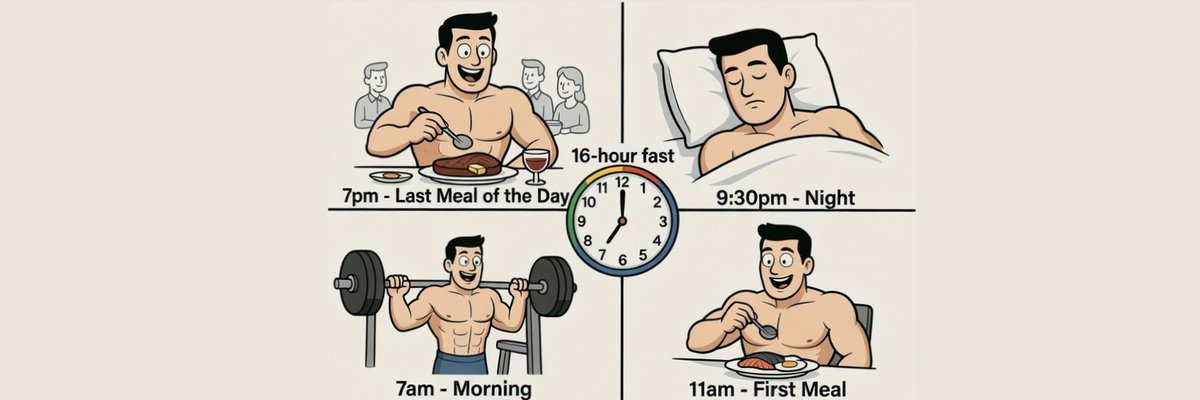
Consider a simple fasting window — Many people start with 12–16 hours overnight (finish dinner by 7 pm, eat breakfast at 11 am or later). This gives insulin more time to drop.
Replace industrial seed oils — Cook with butter, ghee, tallow, or olive oil instead of soybean, corn, canola, or sunflower oils.
Track how you feel — After 2–4 weeks, note changes in energy, hunger, cravings, and clothing fit. Adjust as needed.
More resources to explore:
Dr. Ben Bikman (@BenBikmanPhD) – lectures on insulin and fat metabolism
Dr. Paul Mason (@DrPaulMason) – clear explanations of low-carb science
Dr. Cate Shanahan (@drcateshanahan) – deep dives on seed oils and metabolic health
Books: “Why We Get Fat” by Gary Taubes or “The Obesity Code” by Dr. Jason Fung
Search @metabolicdigest on X for more threads on insulin, fiber, and real-food approaches
Final Thought
We are all different. Experiment thoughtfully, do your own research, and stay both inquisitive and skeptical of mainstream, profit-driven guidelines that often prioritize convenience or sales over real metabolic health. Work with a knowledgeable healthcare professional who understands metabolic health to guide your personal approach. The goal is sustainable metabolic health — not perfect calorie math.
This article is for informational purposes only. Full disclaimer: /disclaimer
Your health, your responsibility.
Continue exploring
Related reading.
Insulin & Hormones
What is Insulin Resistance… and why should you care?
Ketosis & Fasting