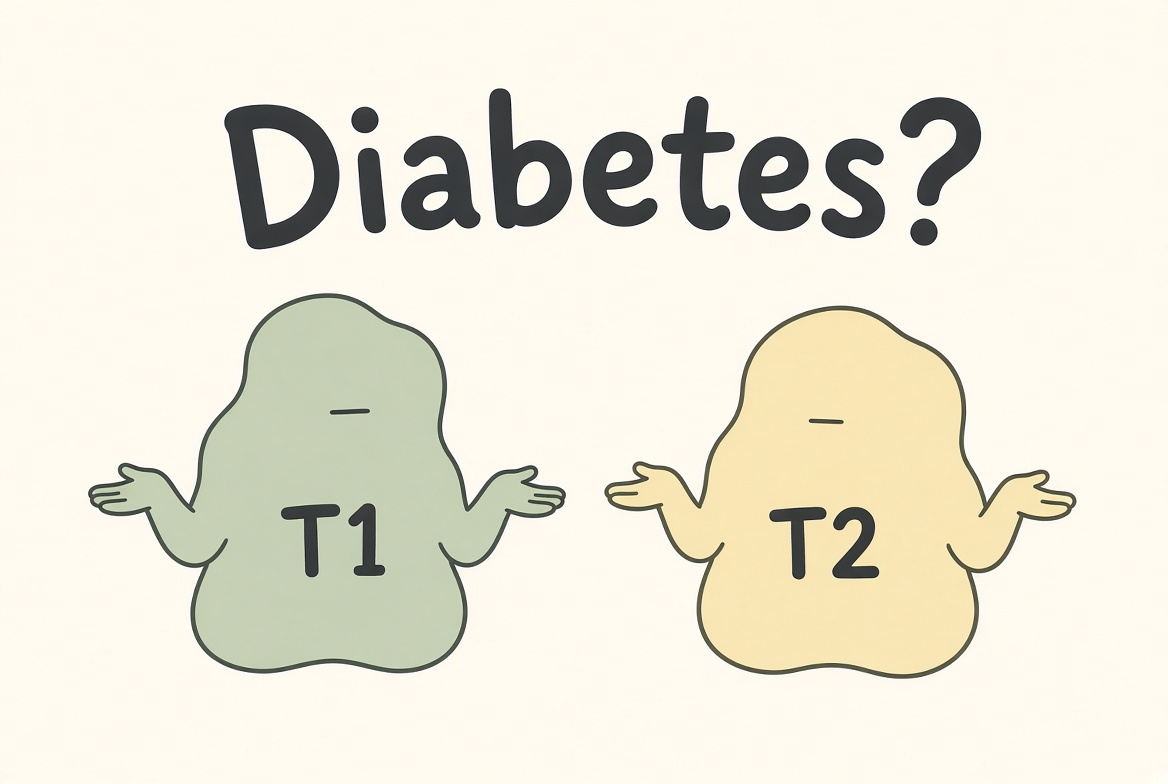
Type 1 and Type 2 share a name. That is about it.
These articles are for information only. They are not medical advice, diagnosis, or treatment. Read the full disclaimer.
Informational only — not medical advice.
Bottom Line First
Diabetes Type 1 and Diabetes Type 2 have one main thing in common: the name Diabetes.
Type 1 diabetes is an autoimmune condition. The body destroys the beta cells that make insulin. The person must take insulin from outside the body to live. A low-carbohydrate diet can make the numbers easier. It does not replace the insulin.
Type 2 diabetes is different. The body still makes insulin. The cells stop listening to it because they have developed insulin resistance. Type 2 is preventable, and in many cases reversible, especially early. If high insulin and high glucose have already damaged other organs, full reversal is less certain.
The name is the overlap
Both conditions are diagnosed on the basis of elevated blood glucose. Both can be called diabetes. That is where the shared ground ends.
Glucose is the lab number people call blood sugar. Insulin is the hormone that moves glucose into cells and, when high, shuts down fat burning. In Type 1, the body cannot make enough insulin. In Type 2, the body often makes too much, for years, because the cells are not responding.
The deeper story of that second path is in What is Insulin Resistance.
Type 1: an autoimmune condition
In Type 1, the immune system attacks the beta cells in the pancreas. Those are the cells that make insulin. The attack is an autoimmune condition: the body's own defenses turn on its own tissue. Once the beta cells are gone, the body cannot make the hormone.
Without insulin, glucose cannot enter most cells. The body starts burning fat in an uncontrolled way. Ketones rise into a medical emergency called ketoacidosis. That is not the same thing as nutritional ketosis. Nutritional ketosis is a normal fuel state when carbohydrate and insulin are low. Ketoacidosis is what happens when insulin is almost absent.
A person with Type 1 must take exogenous insulin. That means insulin from outside the body, by injection or pump. Food, activity, and illness change the dose. The dose does not go to zero.
A lower-carbohydrate diet can still help. Fewer carbohydrates mean smaller glucose swings and often less insulin for meals. The background insulin, the dose that keeps the person alive between meals, stays. Low carbohydrate is a tool for Type 1. It is not a cure, and it is not a reason to stop insulin.
One published case shows what that tool can look like in a trained person. Andrew Koutnik, a metabolism researcher who has Type 1 and keeps a heavy resistance and aerobic training routine, followed a ketogenic diet of 50 grams of carbohydrate a day or less for 10 years. His HbA1c averaged 5.5 percent over 10 years on the diet. Two months of glucose monitoring in 2023 showed a median glucose of 98 mg/dL and 90 percent time in range. Daily insulin fell 43 percent, from 67 to 38 units a day, or from 0.65 to 0.38 units per kilogram of body weight. Thyroid, kidney, and bone density did not worsen. About 9 percent of his time was spent below 70 mg/dL, which is more low-glucose time than guidelines aim for. This is one person, not a trial. It does not show that every person with Type 1 will get the same numbers. It does show that low carbohydrate can tighten control while the insulin stays. The paper is Koutnik et al., JCEM Case Reports, 2024.
Type 2: the body stops listening
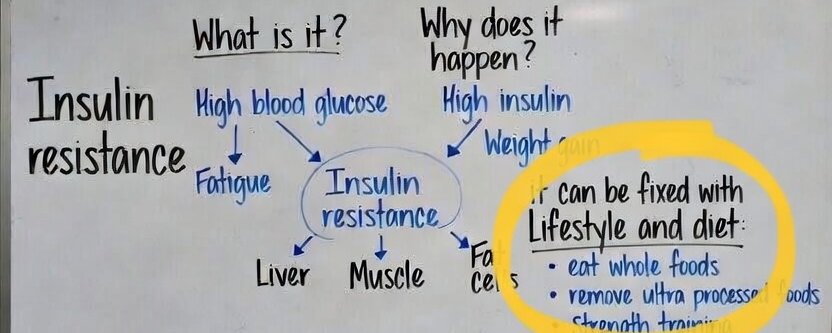
Type 2 starts the other way. The body is responding poorly to insulin because it has developed insulin resistance. The cells, especially in muscle and liver, stop listening. The pancreas makes more to compensate. Blood glucose can look normal while insulin is high. That is the compensated phase. It can last for years before a standard glucose lab looks wrong.
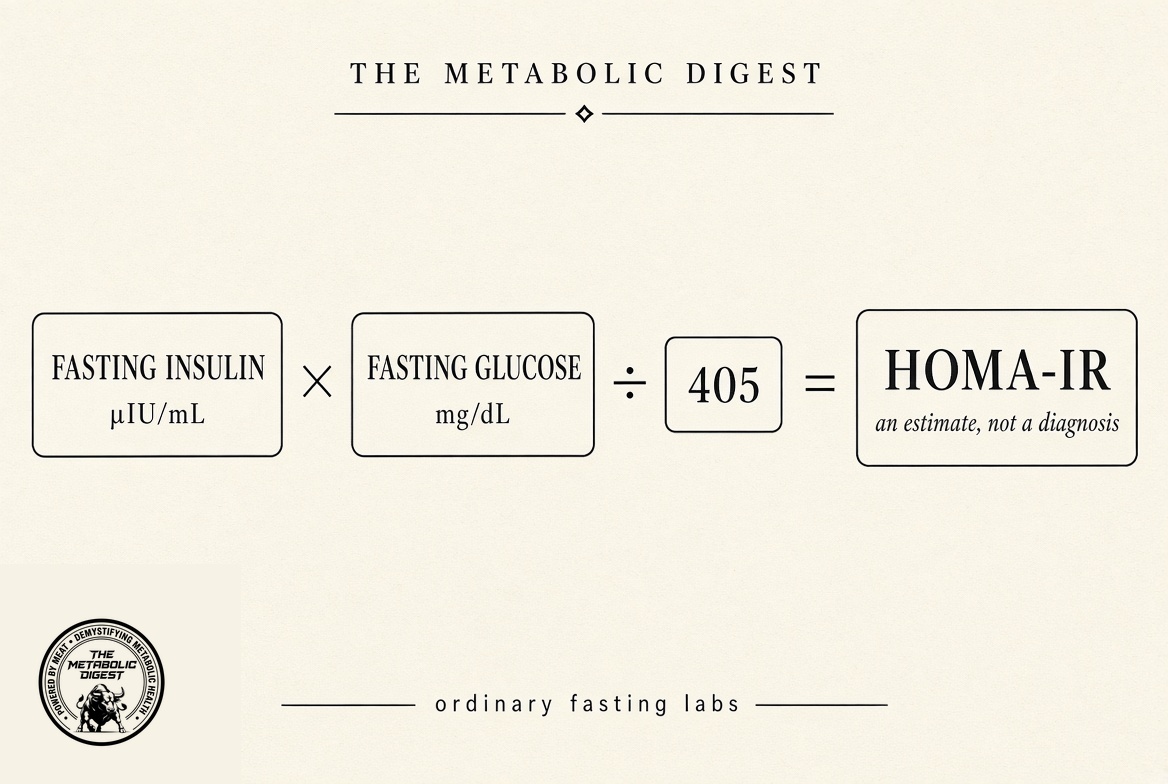
The evidence is there if the right labs and observations are done. A fasting insulin, or HOMA-IR, can show the resistance while glucose is still called normal. Visceral fat, the fat packed around the organs, is another visible signal. So is a rising waist, a high triglyceride-to-HDL ratio, or a fatty liver. Type 2 does not arrive overnight. It accumulates. A simple fasting insulin test is one of the earliest common labs that can catch it.
That path is laid out in What is Insulin Resistance. The lab version is in HOMA-IR is the metabolic number hiding behind a “normal” glucose.
Type 2 is largely preventable. Catch the high insulin early. Watch the visceral fat. Cut the refined carbohydrate that keeps the pancreas pouring insulin out. Type 2 is also reversible in many people, particularly when it is caught early and the diet changes under a clinician.
One English GP practice, led by Dr David Unwin, published an audit of 186 people with Type 2 who chose a lower-carbohydrate diet. After an average of 33 months, 51 percent were in drug-free remission, meaning HbA1c below 6.5 percent with no diabetes drugs. Among those diagnosed less than a year earlier, it was 77 percent. This is a practice audit, not a randomised trial. Patients chose the diet, and adherence was self-reported. It is still one of the clearest clinic records of medically advised therapeutic carbohydrate reduction. The paper is Unwin et al., BMJ Nutrition Prevention & Health, 2023. The same numbers, and a five-year remote program, are already on the insulin-resistance article.
Reversal is not a promise for every person. If high insulin and high glucose have already damaged the kidneys, the eyes, the nerves, or the heart, or if the beta cells have largely burned out, the floor is different. Some people improve a great deal and still need medication. The point is the mechanism, not a guarantee.
How management diverges
In Type 1, the first job is to replace the missing insulin. Food is adjusted around that fact. Carbohydrate counting, or a lower-carbohydrate pattern, changes the meal dose. It does not remove the need for insulin.
In Type 2, the first job is to lower the demand for insulin. That means fewer carbohydrates that force the pancreas to keep pouring it out. Many people see glucose fall, and some reduce or stop glucose-lowering drugs under a clinician who understands the change. Stopping a drug without that check is dangerous, especially with drugs that can cause low blood sugar.
The same meal can look different in the two conditions. A person with Type 1 may need a dose for the protein in a steak. A person with Type 2 may need less total insulin across the day because the meal does not spike glucose the way bread and soda do. Same plate. Different problem.
What this is not
This is not a protocol. It is not a reason for a person with Type 1 to stop insulin. It is not a claim that every person with Type 2 will reverse the condition. It is a distinction the name hides.
If a clinician treats both the same way, ask which one you have, and what the insulin is doing.
What to do with this information?
If you or someone you love has been told they have diabetes, ask which type. Ask whether the body still makes insulin. If the diagnosis is Type 2 or prediabetes, ask for a fasting insulin or HOMA-IR, and look at the waist and the visceral fat, not only the glucose. Do not change insulin or other glucose-lowering drugs on your own. Food, fasting, and training change the dose. A clinician who understands metabolic health should be in that conversation.
Do some thoughtful research. Your health, your responsibility.
The Metabolic Digest is an educational library about metabolic health and whole-food, animal-based ketogenic nutrition. Nothing on this site is medical advice, diagnosis, or treatment. Food, fasting, sleep, and training changes can affect medications, especially drugs that lower blood glucose. Individual responses vary. Consult a clinician who understands metabolic health before you change how you eat, train, fast, or read your labs. Your health is your responsibility.
Continue exploring
Related reading.
Insulin & Hormones
What is Insulin Resistance… and why should you care?