How Digestion Really Works – A Simple Breakdown
These essays are for information only. They are not medical advice, diagnosis, or treatment. Read the full disclaimer.
Bottom Line First:
Digestion is your body’s way of breaking down food into usable nutrients and getting rid of what it doesn’t need. It’s a coordinated process involving mechanical action, enzymes, and different parts of the gut. Understanding the basics helps you see why food quality and meal composition matter so much for metabolic health.
Medical Disclaimer. This information is for educational purposes only and is not medical advice, diagnosis, or treatment. Always consult a qualified healthcare professional before making changes to your diet, lifestyle, fasting practices, or medications. Do not stop or change any prescribed treatment without your doctor's guidance. Individual responses vary, and what works for one person may not be safe or effective for another.
What are the Two Main Parts of Digestion
Digestion has two major components:
1. Mechanical Digestion — Physical breaking down of food. This starts in the mouth (chewing) and continues in the stomach (churning and mixing into a liquid called chyme). It increases surface area so enzymes can do their job.
2. Chemical (Enzymatic) Digestion — Enzymes break large molecules into small, absorbable pieces.
Proteins → amino acids
Fats → fatty acids and glycerol
Carbohydrates → simple sugars (mostly glucose)
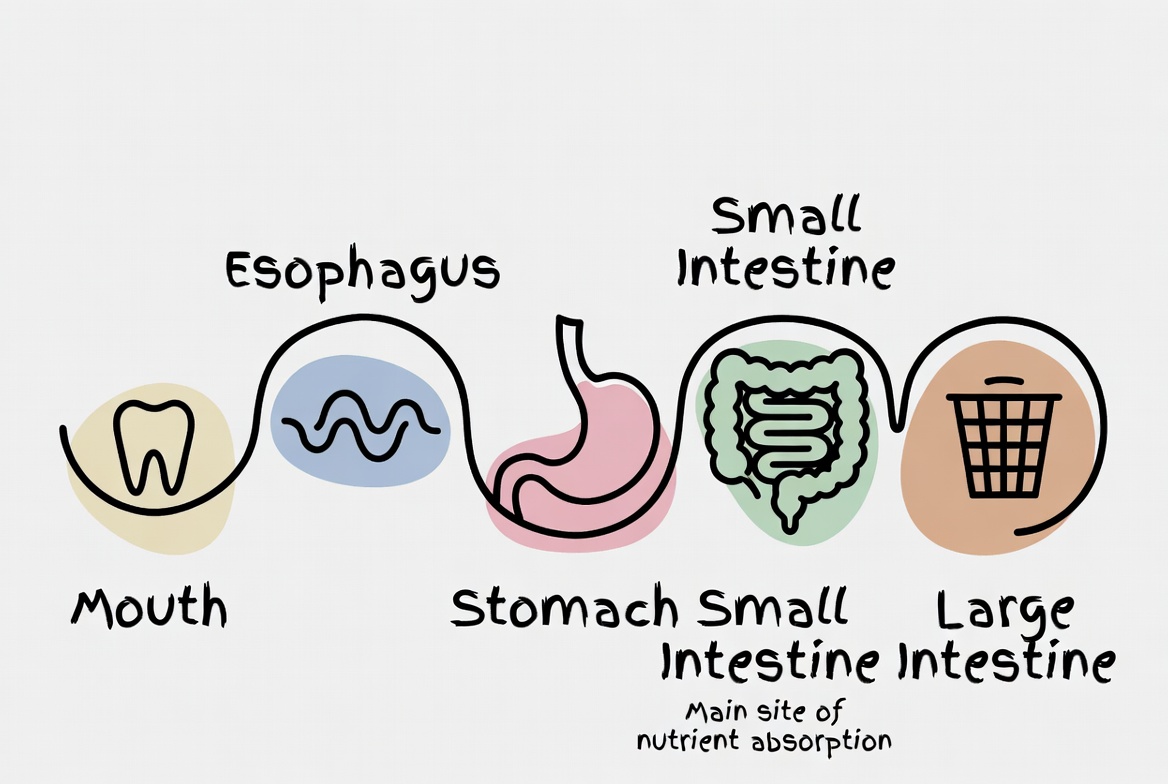
Where It All Happens – A Simple Journey
· Mouth: Chewing + salivary amylase (starts breaking down starches).
· Stomach: Strong acid and pepsin (starts protein digestion). Very little absorption here except for alcohol and some drugs.
· Small Intestine (the star of the show— about 20 feet long): This is where the majority of nutrient absorption happens. Your body has a highly efficient auto-enzymatic system here. The pancreas releases enzymes (proteases for proteins, lipases for fats, amylases for carbs) and the liver/gallbladder sends bile acids. Bile acids play a critical dual role: they emulsify fats (breaking them into tiny droplets so lipases can work efficiently) and also help enhance protein breakdown by supporting the action of pancreatic enzymes like trypsin and chymotrypsin.
Human digestion is unique among primates. While many primates are excellent at extracting nutrients from fibrous plants thanks to longer digestive tracts and specialized gut bacteria, humans have a shorter, more carnivore-like digestive system. We are more similar to carnivores such as cats and to omnivorous monogastric animals such as dogs and pigs in our ability to efficiently digest and absorb animal proteins and fats, but we do not extract nutrients from plants nearly as well as other primates.
The lining of the small intestine is covered with tiny finger-like projections called villi and microvilli that dramatically increase surface area — making absorption incredibly effective. Amino acids, fatty acids, glucose, vitamins, and minerals pass through this specialized lining into the bloodstream or lymph system.
The small intestine is so important because it’s where your body decides what actually gets into circulation and what gets left behind. This process directly affects blood glucose levels, insulin response, and overall nutrient delivery.
· Large Intestine (Colon): Mainly absorbs water and electrolytes. Also houses gut bacteria that ferment remaining fiber and produce some short-chain fatty acids. Forms and stores waste (stool) for elimination.
Why This Matters for Metabolic Health
The small intestine is the main gateway for nutrients entering your bloodstream. How efficiently it works influences blood glucose spikes, insulin demand, and how well your body uses the food you eat. Because humans have a digestive system more similar to carnivores and omnivorous monogastrics than to plant-specialized primates, animal-based meals (protein + natural fats) are often broken down more steadily and pair especially well with the body’s own enzymatic processes, including the important role of bile acids.
Simple Takeaway
Chew well, eat real foods, and give your digestive system time to work. Focus on nutrient-dense animal-based foods that your body is well-equipped to break down and absorb efficiently.
Do some thoughtful research.
Your health, your responsibility.
This article is for informational purposes only. Full disclaimer: /disclaimer
Your health, your responsibility.
Continue exploring